Discover GWOP University Recordings, a leading provider in the music industry. Wake up, chase your dreams, and explore our featured demos and merchandise.
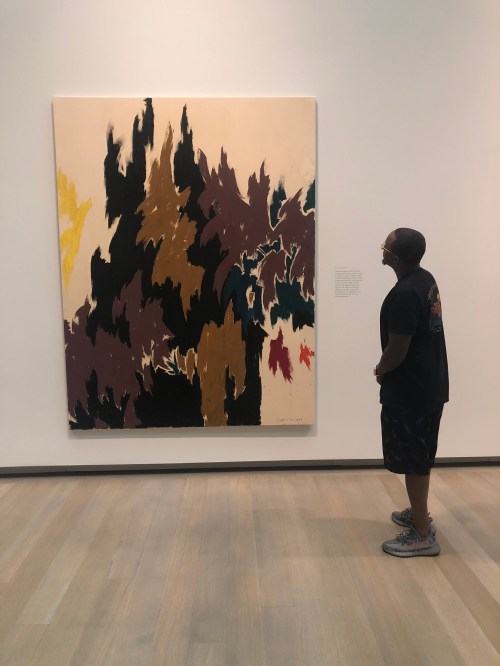
Considered one of the most important painters 🎨 of the 20th century, Clyfford Still (1904–1980) was among the first generation of Abstract Expressionist artists who developed a new and powerful approach to painting in the years immediately following World War II.
After the artist’s death in 1980, the Clyfford Still Estate was sealed off from public and scholarly view. Still’s will stipulated that his estate be given in its entirety to an American city willing to establish a permanent museum dedicated solely to his work, ensuring its survival for exhibition and study. The Still Museum collection, which represents 95 percent of the artist’s lifetime output, includes approximately 3,125 works created between 1920 and 1980. This museum is full of inspiration. Pictured above is the last painting created by Clyfford Still in 1979.
👀🍳🎨 Eyes and Eggs, arguably one of #Basquiat’s “simpler” canvases. The work is just a man, evidently a chef of sorts, holding up his pan of eggs, with his name tag reading “Joe”. He is staring at the viewer with so much intensity that one feels powerless. The piece stands as the reminder of the everyday moment that one never takes time to notice: the labor that goes unseen, the eggs that we eat without any gratitude for where they came from, and the consequences of such blind actions.
Unlike his contemporaries Jackson Pollock and Mark Rothko, de Kooning’s paintings refer to natural forms and specific places or events, pushed into pure abstraction by his reliance on color and the deep build-up of paint to create form. Depth and perspective are subordinated to the flattening effects of his slashing, violent brushwork. Some of the “abstract landscapes” from 1957 to 1963 are based on the landscape around Long Island Sound, including Merritt Parkway, a local highway. Speed is suggested by the controlled thrusts of the brush while the naturalistic palette conveys the crisscross of the road through the landscape.
Born October 25, 1881, Malaga, Spain, Pablo Picasso, became one of the greatest and most influential artists of the 20th century and the creator (with Georges Braque) of Cubism. A Spanish expatriate painter, sculptor, printmaker, ceramicist, and stage designer, Picasso was considered radical in his work. After a long prolific career, he died April 8, 1973 in Mougins, France.
Pablo left 1885 paintings, 1228 sculptures, 2880, ceramics and over 12,000 drawings at the time of his death.
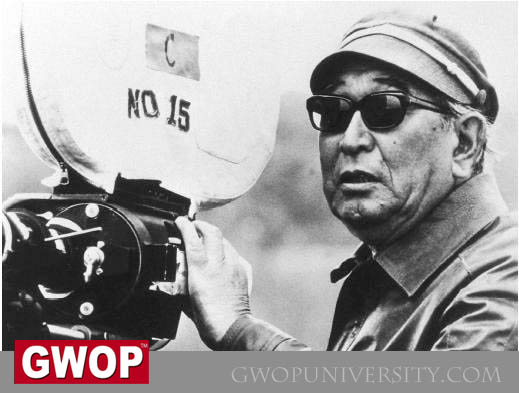
Akira Kurosawa 黒澤 明 (March 23, 1910 – September 6, 1998) was a Japanese film director, screenwriter, producer, and editor. Regarded as one of the most important and influential filmmakers in the history of cinema, Kurosawa directed 30 films in a career spanning 57 years.
After training as a painter (he storyboards his films as full-scale paintings), Kurosawa entered the film industry in 1936 as an assistant director, eventually making his directorial debut with Sanshiro Sugata (1943). Within a few years, Kurosawa had achieved sufficient stature to allow him greater creative freedom. Drunken Angel (1948)–“Drunken Angel”–was the first film he made without extensive studio interference, and marked his first collaboration with Toshirô Mifune. In the coming decades, the two would make 16 movies together, and Mifune became as closely associated with Kurosawa’s films as was John Wayne with the films of Kurosawa’s idol, John Ford. After working in a wide range of genres, Kurosawa made his international breakthrough film Rashomon (1950) in 1950. It won the top prize at the Venice Film Festival, and first revealed the richness of Japanese cinema to the West. The next few years saw the low-key, touching Ikiru (1952) (Living), the epic Seven Samurai (1954), the barbaric, riveting Shakespeare adaptation Throne of Blood (1957), and a fun pair of samurai comedies Yojimbo (1961) and Sanjuro (1962). After a lean period in the late 1960s and early 1970s, though, Kurosawa attempted suicide. He survived, and made a small, personal, low-budget picture with Dodes’ka-den (1970), a larger-scale Russian co-production Dersu Uzala (1975) and, with the help of admirers Francis Ford Coppola and George Lucas, the samurai tale Kagemusha (1980), which Kurosawa described as a dry run for Ran (1985), an epic adaptation of Shakespeare’s “King Lear.” He continued to work into his eighties with the more personal Dreams (1990), Rhapsody in August (1991) and Madadayo (1993). Kurosawa’s films have always been more popular in the West than in his native Japan, where critics have viewed his adaptations of Western genres and authors (William Shakespeare, Fyodor Dostoevsky, Maxim Gorky and Evan Hunter) with suspicion – but he’s revered by American and European film-makers, who remade Rashomon (1950) as The Outrage (1964), Seven Samurai (1954), as The Magnificent Seven (1960), Yojimbo (1961), as A Fistful of Dollars (1964) and The Hidden Fortress (1958), as Star Wars (1977).


 GWOP University